This was one of those calls where the homeowner already knew the stakes.
A storm-damaged tree had shifted and was pressing into the roofline. Once wood is rubbing against a house, small movement can turn into bigger damage fast. The goal was to stop it before it got worse.
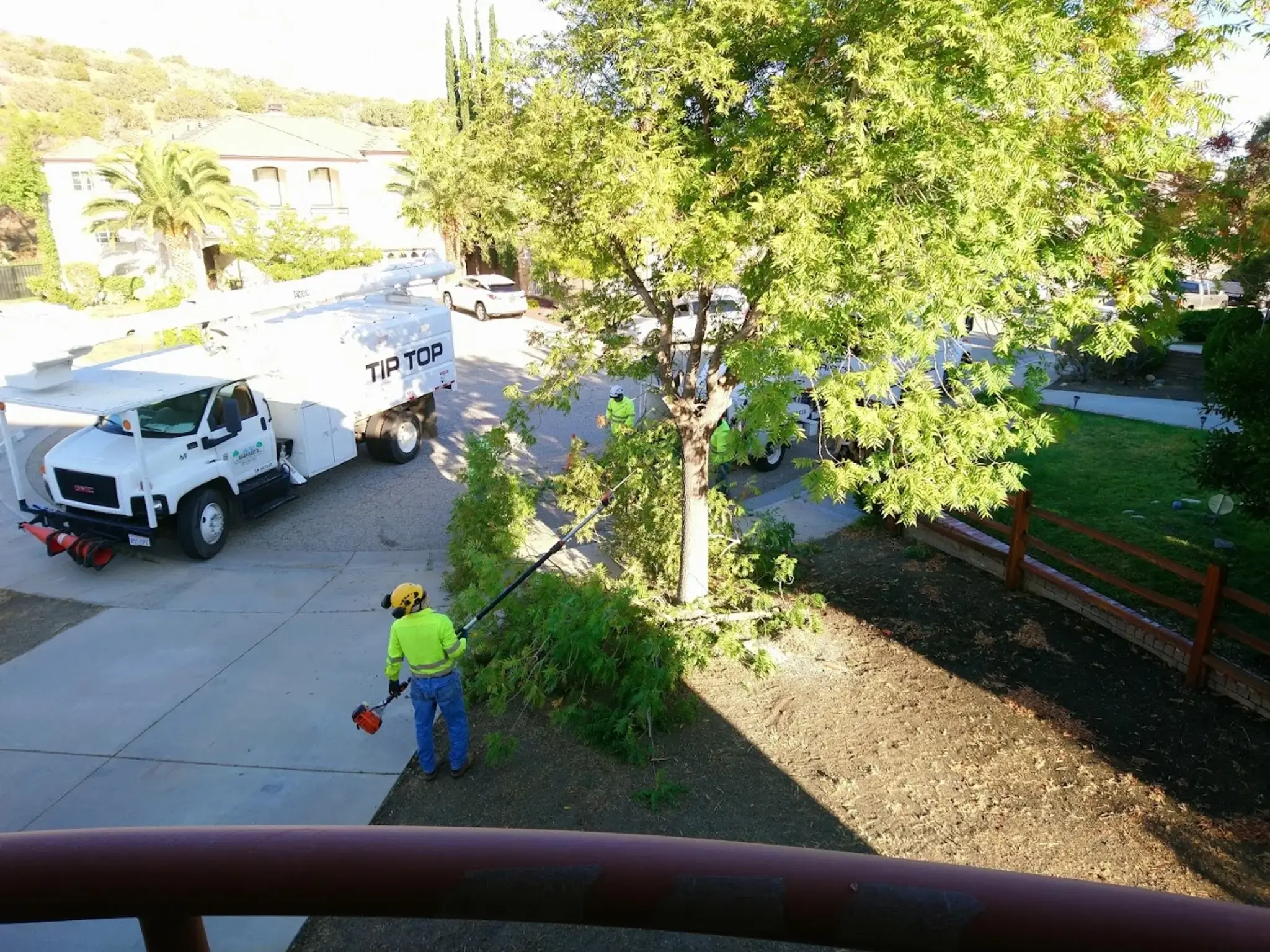
Tip Top Arborists got out quickly, checked the lean and the contact points, and recommended removal. The crew set up for controlled work around the roof, removed the tree in sections, and kept the job moving without turning the yard into a disaster. The homeowner liked the pace, the care, and how straightforward the whole experience was.
Location: Antelope Valley, CA
Service: Emergency Tree Service
Equipment Used / Tools: chainsaws and pole saws, climbing lines and harness gear, rigging and lowering lines, protective tarps, hauling equipment, cleanup tools
Crew: ISA-certified arborist with the Tip Top Arborists crew
Completion Time: Completed quickly
The tree was damaged and already leaning on the roof. That is a clear hazard.
The hard part is removing it without adding damage. You cannot just cut and hope. The weight has to come off in a controlled way so it does not shift, drop, or scrape harder into the structure.
This needed quick evaluation and careful removal. Fast, but not reckless.
“Tip Top was great in removing a tree that was damaged and was leaning on our roof. They were quick to evaluate the tree and remove it quickly to not cause further damage to the house. They are a great company to work with.”
Roof calls are a different kind of job than a normal trim.
If a tree is touching the house, the main goal is control. Keep it steady while you take weight off, piece by piece. That usually means rigging, sectioning, and lowering sections down carefully.
Cleanup matters too. Once the danger is handled, the homeowner still needs the area around the house usable again.
Step 1: Quick evaluation on site. The arborist checked the damage, the lean, and where the tree was pressing on the roof.
Step 2: Choose the safest removal approach. Focus was on relieving pressure without shifting the tree into the house.
Step 3: Set protection and control points. Tarps, rigging, and safe zones went in before cutting started.
Step 4: Remove the tree in sections. Weight came off gradually so the roof was not taking extra stress during the process.
Step 5: Keep the site workable as they went. Debris was moved out in stages, not left in one big pile.
Step 6: Clean up and double-check the roofline. Debris hauled out, area cleared, and the contact zone left clean.
Call (661) 942-5501 for a free estimate.
Yes. Treat it as urgent. Keep people back and call a pro. Do not cut on it yourself.
Absolutely. Speed matters when a tree is already on a structure.
We do. Controlled sections. Rigging. Lowering lines. Slow weight removal.
Tip Top Arborists got the damaged tree off the roof before it had more time to scrape, shift, or fail further. The crew evaluated it quickly, set up for controlled removal near the structure, and took it down in sections so pressure came off the house gradually.
Afterward, the debris was cleared and the immediate hazard was gone. The homeowner said the company was great to work with and appreciated how fast the evaluation and removal happened.
If a tree is sitting on your roof, it usually will not “settle” into a safer spot. Tip Top Arborists can respond quickly, remove it with control, and clean up so your home feels usable again.